Open Today Sales: 8:30 AM-9 PMOpen Today Service: 7 AM-7 PM

This Ford F-150 vs. Toyota Tundra matchup explores just about everything you need to know about two icons of the pickup truck world. The 2026 Toyota Tundra takes the lead with legendary dependability, peak towing and payload power in the same build rather than separate configurations, and a lineup that caters to a greater variety of drivers. Peruse our Ford F-150 vs. Toyota Tundra comparison below – compiled by the truck experts here at Toyota of Irving – to discover why the Tundra isn't just a competitor of the renowned F-150 – it's the smarter choice for full-size truck enthusiasts.
This Ford F-150 vs. Toyota Tundra comparison will tell you just about everything you want to know about these two legends of the pickup truck segment. Both have their strengths and will edge out the other in certain categories. The Ford F-150 is well-known and well-regarded. The Toyota Tundra boasts all the reliability and style one expects of a Toyota vehicle – while also boasting job-site-ready chops. We're going to delve into the details through the course of our Ford F-150 vs. Toyota Tundra comparison.
These light-duty trucks each come in a variety of trims and configurations, but the new Toyota Tundra for sale shines with a broader selection – five gas-only models and five mild-hybrid variants – ensuring there's a Tundra pickup to match virtually any set of requirements or lifestyle.
From the utility-driven SR and SR5 gas models to the adventure-ready TRD Pro, luxurious Capstone, and other fuel-efficient i-FORCE MAX hybrid editions, the 2026 Tundra doesn't limit itself to one set of truck enjoyers.
The 2026 Ford F-150 provides an array of trim choices, though it doesn't have as robust a lineup as the new Tundra. Drivers can choose from these eight models:
When it comes to Toyota Tundra vs. Ford F-150 configurations, these full-size trucks are closely matched. Each provides 5.5-foot and 6.5-foot bed lengths. For long box options, the Ford bed is 8 feet, while the Tundra setup is slightly larger at 8.1 feet. The Tundra comes with either a Double Cab or CrewMax Cab style, while the Ford F-150 offers a Regular Cab, SuperCab, or SuperCrew Cab setup. However, the 2026 Tundra truly raises the bar, presenting a broader range of trims that don't just fit drivers – they cater to their specialties, whether it's conquering rugged trails, towing massive loads, or commanding attention on city streets.
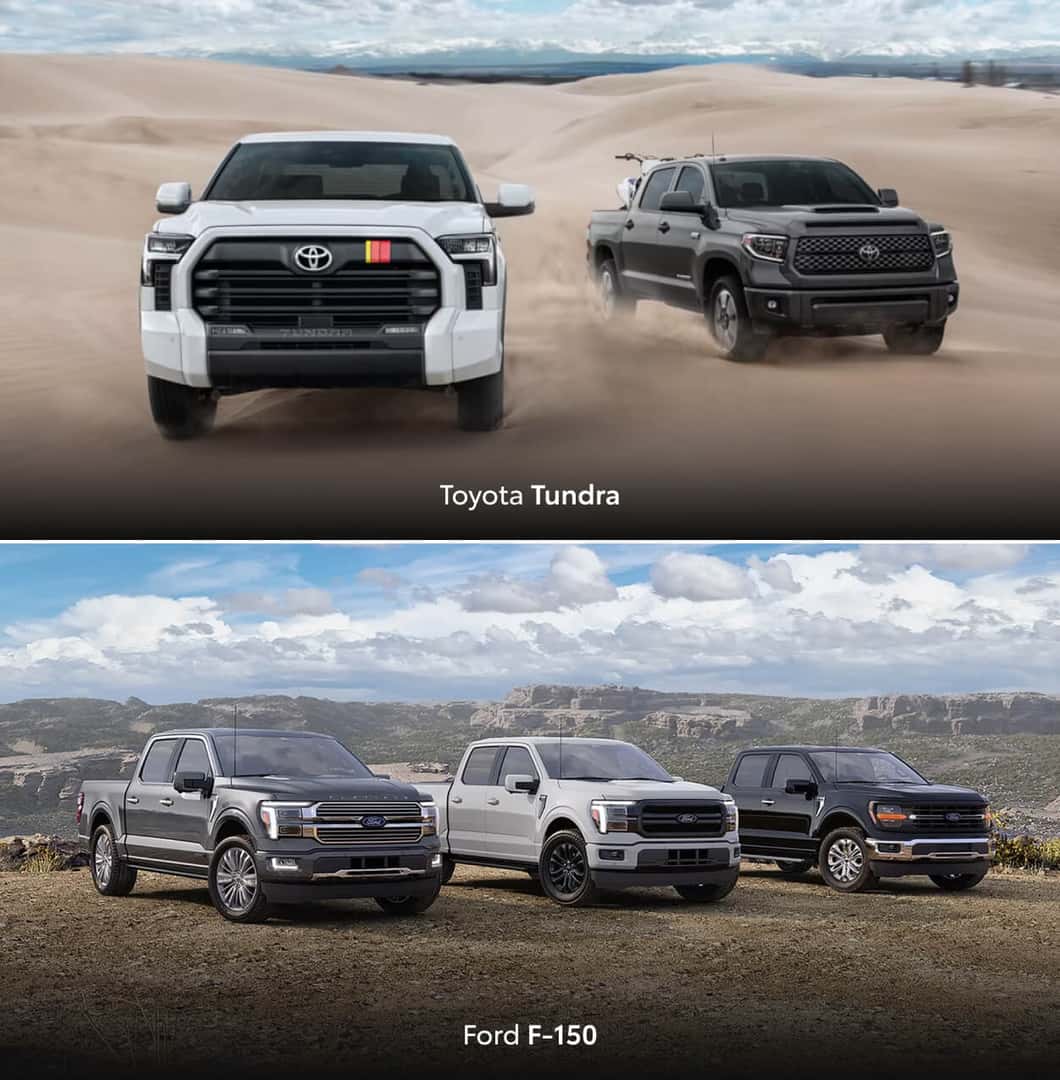
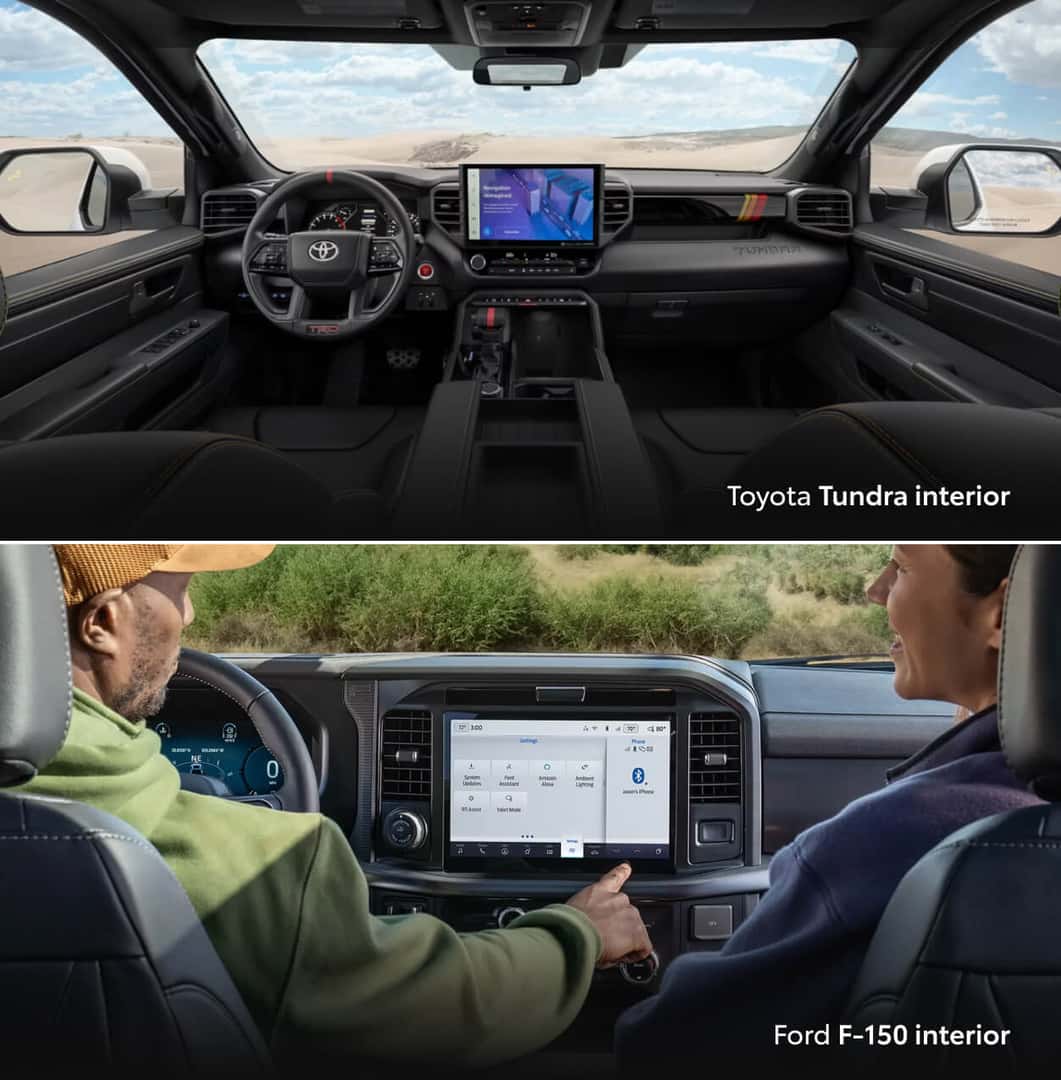
The 2026 Toyota Tundra stands out with an expanded lineup of models compared to the 2026 Ford F-150, featuring five gas-powered and five hybrid trims, compared to the eight F-150 models. Both full-size trucks offer multiple bed lengths and cab types, including a roomy 8-foot-long box for maximum hauling flexibility.
| 2026 Toyota Tundra | 2026 Ford F-150 | |
|---|---|---|
| Standard Engine | i-FORCE 3.4L twin-turbo V-6 gas | 2.7L EcoBoost V-6 gas |
| Hybrid Engine | i-FORCE MAX 3.4L twin-turbo V-6 hybrid | 3.5L PowerBoost V-6 hybrid |
| Horsepower |
|
|
| Torque |
|
|
| Transmission | 10-speed auto | 10-speed auto |
| Drivetrain | RWD or 4WD | RWD or 4WD |
| Max. EPA-Est. MPG (Cty / Hwy / Comb) | 20 / 24 / 221 | Not yet rated |
| Max. Towing Capacity | 12,000 lbs2 | 13,500 lbs3 |
| Seating | 5 | 3 - 6 |
| Cab Styles |
|
|
| Bed Sizes |
|
|
Horsepower and torque output – along with towing and payload, which we'll cover next – are often some of the main priorities for light-duty truck buyers, and the 2026 Toyota Tundra and Ford F-150 throw up some impressive numbers. However, the Tundra makes that capability more attainable, whereas the F-150 is an uphill climb to get the exact specs you want and need.
The 2026 Tundra is motivated by either a gas or hybrid powertrain. It starts off with the standard gas-only i-FORCE 3.4-liter twin-turbo V-6. This capable engine comes in two tunings, the first of which makes 358 horsepower and 406 pound-feet of torque. However, you can boost that muscle to 389 horsepower and 479 pound-feet of torque with all but the entry-level SR trim. In comparison, the Ford F-150 comes standard with a 2.7-liter EcoBoost V-6, which can't quite match the power of the Tundra, generating 325 horsepower and 400 pound-feet of torque.
For those who want an extra dose of fuel efficiency with your pickup, both models supply a hybrid setup – the Tundra with its i-FORCE MAX 3.4-liter twin-turbo hybrid V-6, and the F-150 with its 3.5-liter PowerBoost V-6 hybrid. Yet, even among these hybrid powertrains, the Tundra takes the lead, producing 437 horsepower and 583 pound-feet of torque versus the 420 horsepower and 578 pound-feet of torque with the F-150. Hybrid F-150 trucks haven't been rated by the EPA for the 2026 model year at the time of writing, but we can tell you that Tundra Hybrid pickups earn up to an EPA-estimated 20/24/22 MPG (City/Highway/Combined).1
The Ford F-150 does have additional engines – six in total – but only two surpass the i-FORCE MAX on the 2026 Tundra: the 3.5-liter high-output V-6 with 450 horsepower (it still comes up short in terms of torque ratings with 510 pound-feet) and the 5.2-liter Supercharged V-8. However, both of these engines are limited to the Raptor trim – the highest-priced model in the F-150 lineup. With the F-150, maximum force comes with the maximum price. In contrast, the most powerful engine for the 2026 Tundra is available across five different tiers with numerous configurations, making top-tier capability readily available.
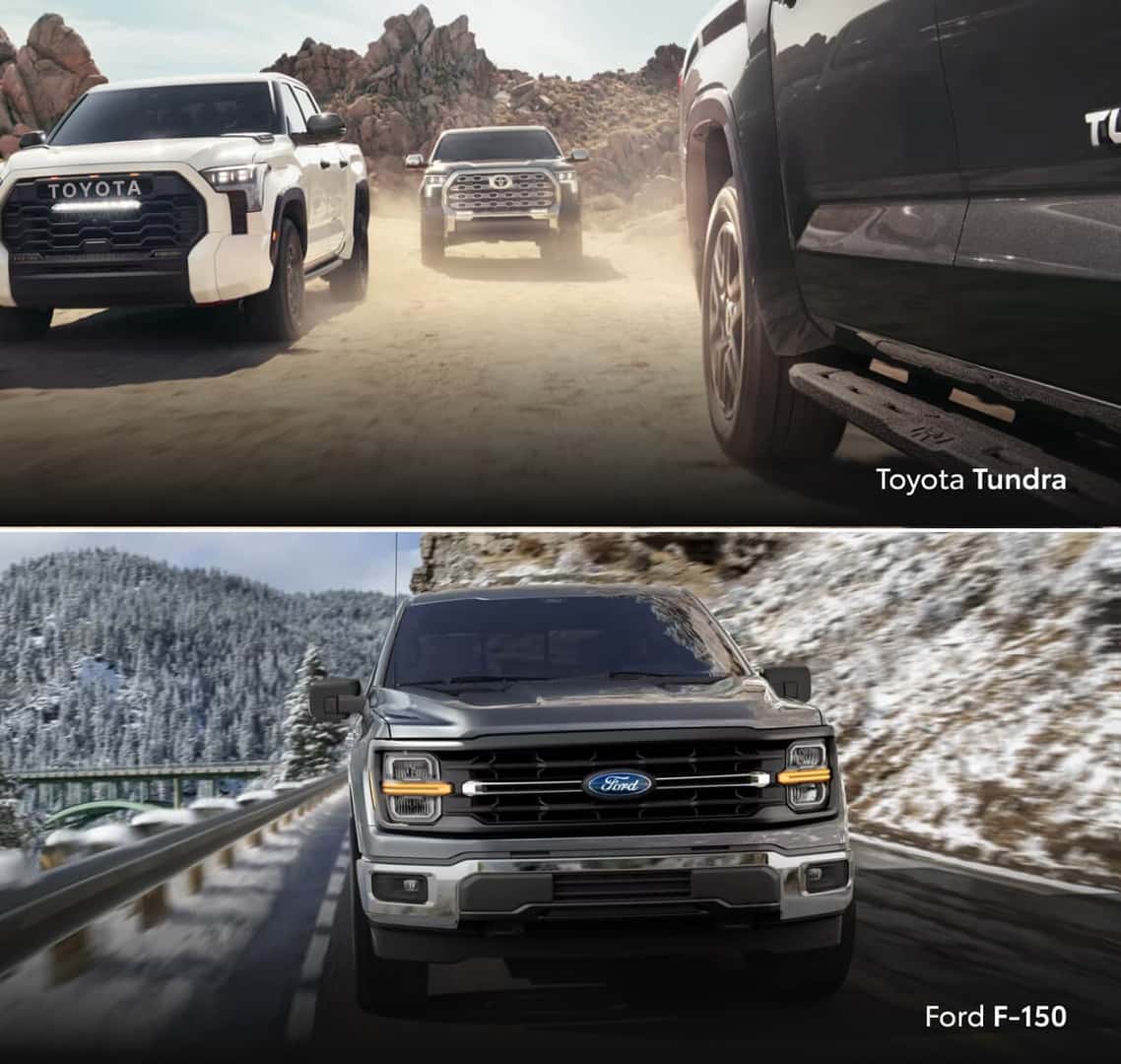
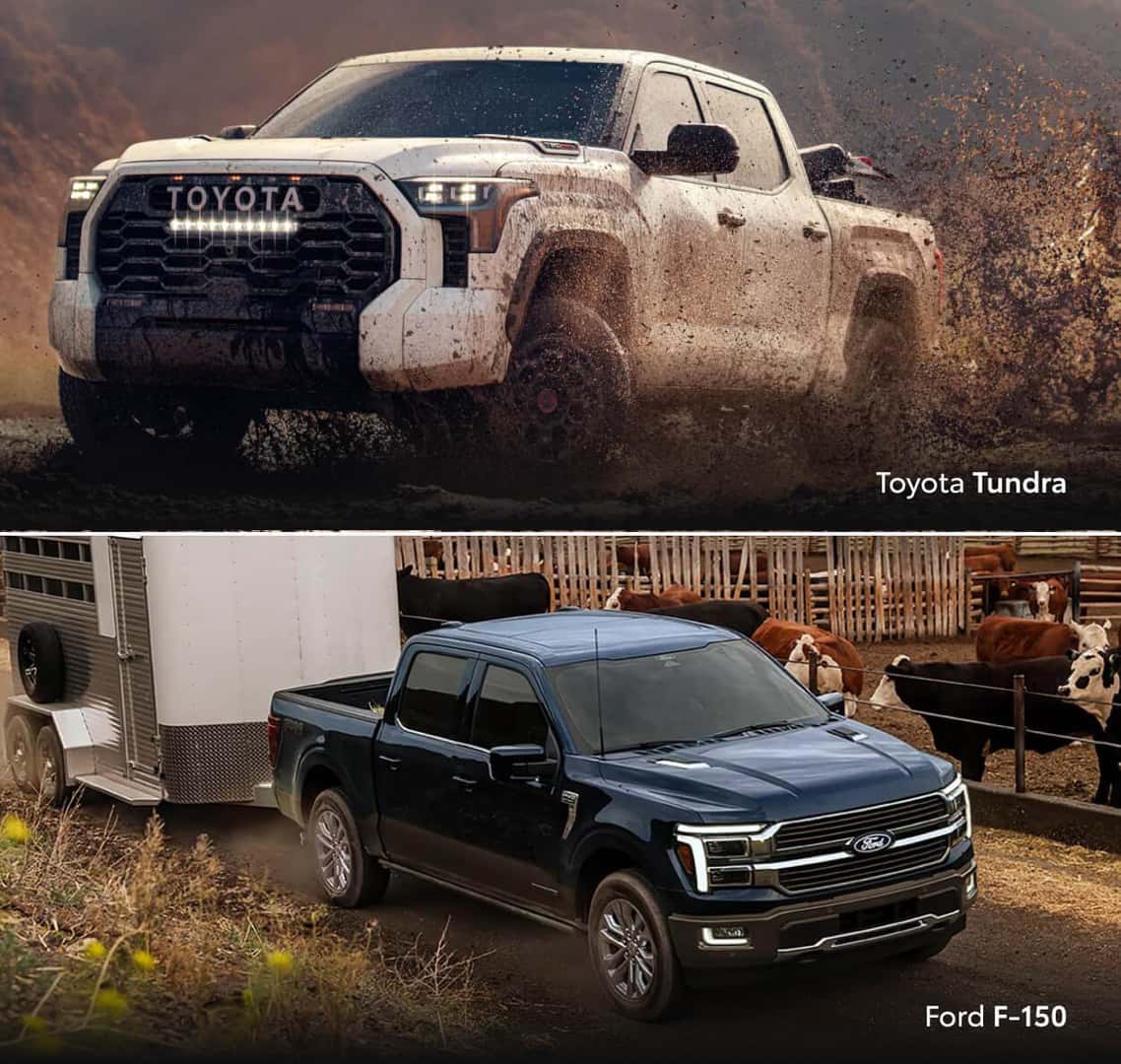
The 2026 Tundra harnesses outstanding power with both its gas and hybrid engines, putting its strongest powertrain under the hood of several trims for easy access. Meanwhile, the Ford F-150 offers higher-output options than the Tundra with two engines, but they're both confined to the pricey range-topping Raptor model, making peak performance far less attainable.
On paper, the F-150 boasts slightly higher maximum towing and payload ratings than the Toyota Tundra towing capacity and payload strength, but when you dive deeper into those specs, the reality is a bit more nuanced. The 2026 Toyota Tundra can tow up to 12,000 pounds2 and has a maximum payload rating of 1,940 pounds.4 By comparison, the Ford F-150 reaches up to 13,500 pounds for towing3 and 2,440 for payload.5 But, let's take a closer look.
The Tundra has two exceptional – and rather unique for the segment – advantages over the Ford F-150, despite its lower capacities. First, you can reach these maximums with the standard gas engine. No upgrades or packages are required. This is rare for the full-size pickup segment. Even less common, you get the maximum towing and payload capacity with the same configuration of the Toyota Tundra. Typically, truck fans have to choose between maximizing payload or towing potential. Opt for a Toyota Tundra SR5 with rear-wheel drive, a 6.5-foot bed, and a Double cab, and you can pull 12,000 pounds2 behind the vehicle or haul 1,940 pounds4 in the bed.
On the other hand, the Ford F-150 can only manage up to 8,400 pounds of towing3 and 1,775 pounds of payload5 with its base engine. In order to achieve its maximum towing potential, you'll need the available 3.5-liter V-6, a SuperCrew Cab, a 6.5-foot bed, and 4x4 capability. This isn't where you get the highest payload rating, though. For that, you'll need the same available engine, but with a Regular Cab, 8-foot box, and a 4x2 drivetrain – an almost completely different build. Overall, our F-150 vs. Tundra towing review shows that the Toyota truck keeps things simple, letting drivers confidently build a pickup that delivers ultimate strength without the guesswork.
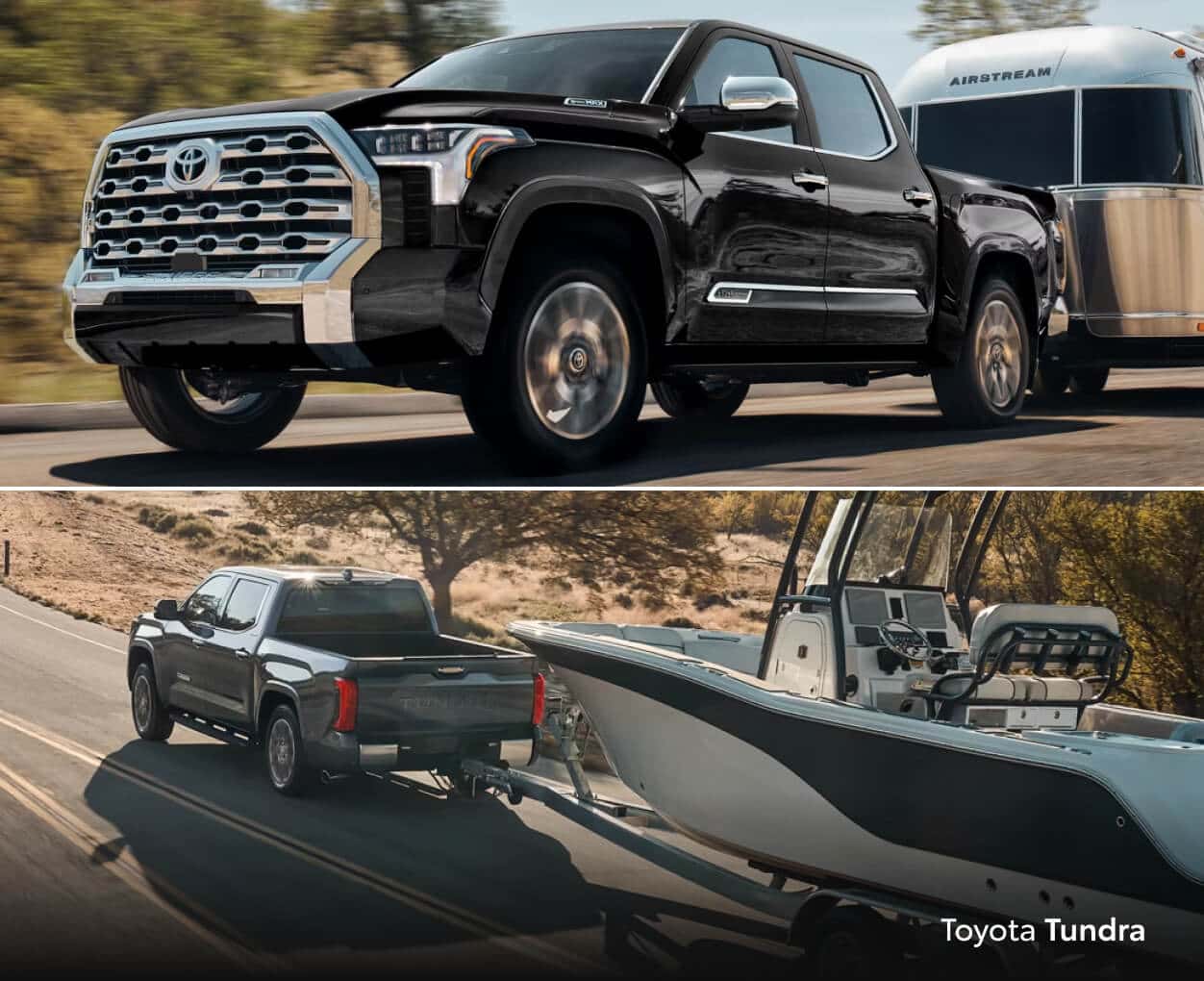
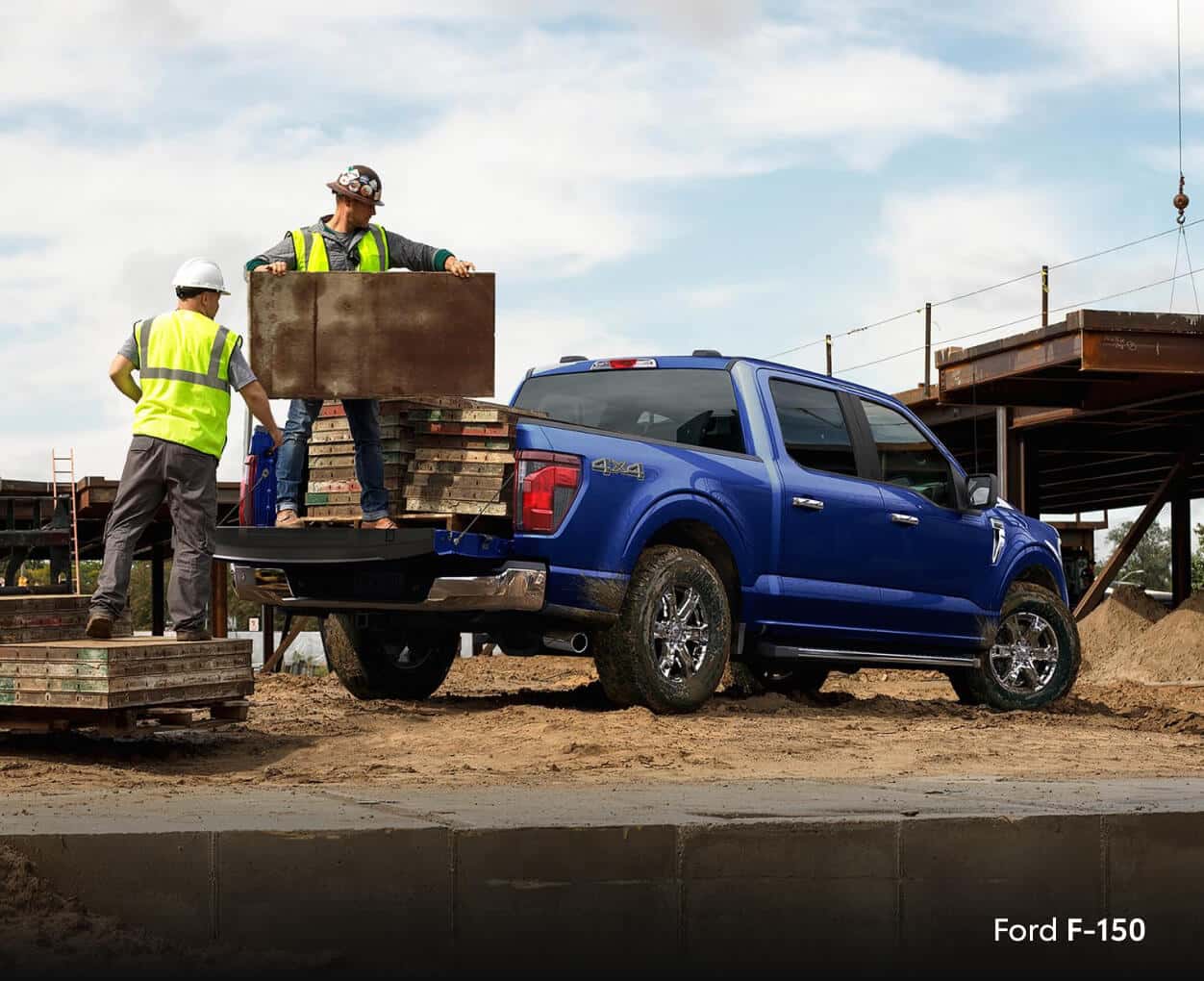
The 2026 Toyota Tundra gives its maximum towing (12,000 pounds2) and payload (1,940 pounds4) strengths in the same configuration, which includes its standard gas engine. With the Ford F-150, you have to upgrade to its available 3.5-liter V-6 engine to reach peak towing or payload performance, and then you have to choose which one to prioritize, as they each require a distinct build.
The Toyota Tundra vs. F-150 size is remarkably close, with variations depending on bed length and cab configuration. While we don't have the official dimensions for the 2026 Ford F-150 at the time of writing, we'll look at the 2026 measurements for the Tundra and the 2025 values for the Ford F-150 since neither model underwent a substantial redesign for the new model year. The Tundra reaches a full length of 252.5 inches, slightly longer than the 243.5 inches of the F-150, and it has a broader wheelbase at 157.7 inches versus 157.2 inches, giving it a somewhat sturdier posture.
Inside, the Tundra provides a bit more front headroom in the CrewMax, while the F-150 supplies slightly extra front legroom in the SuperCrew. These minor differences won't significantly impact comfort, so choosing between the two comes down to other priorities like might, towing, and available trims.
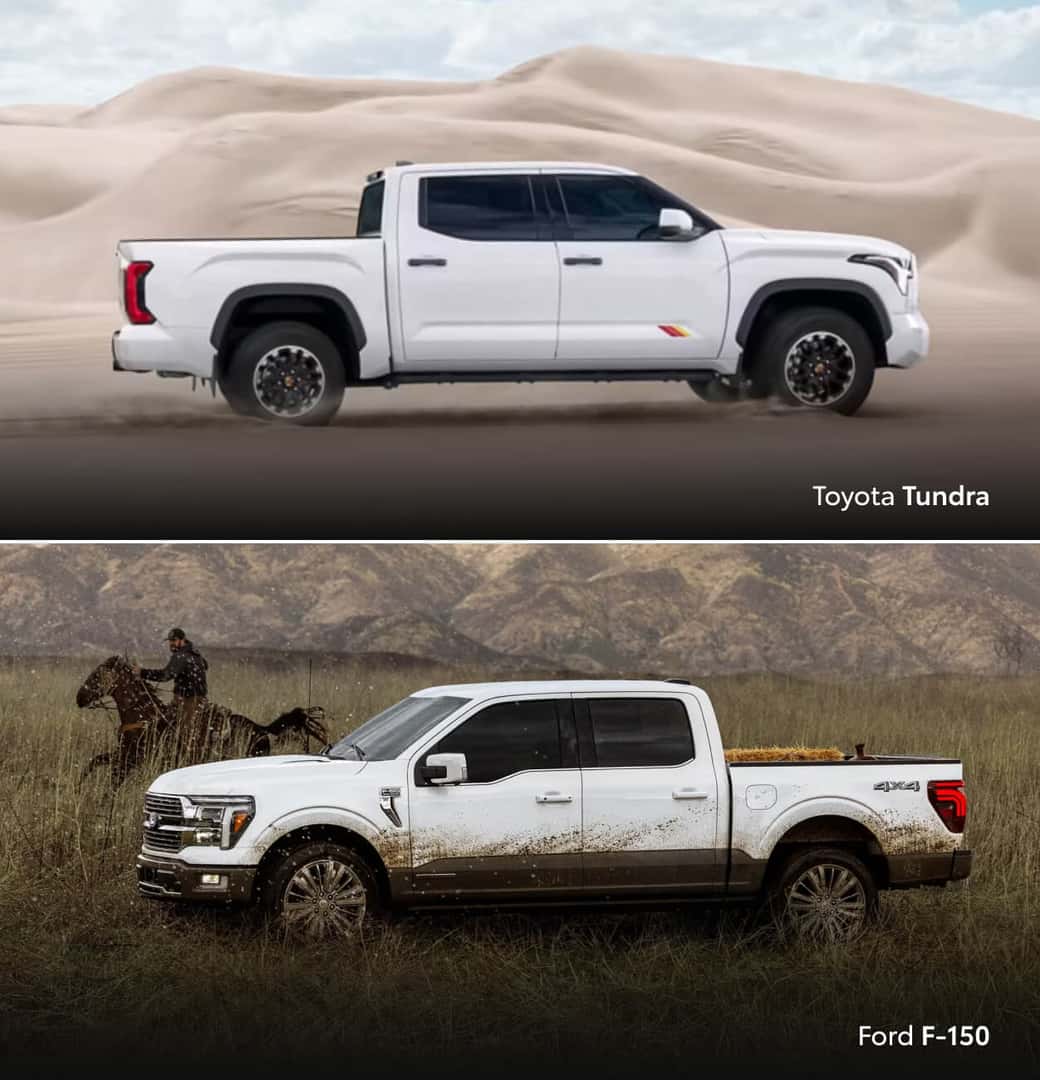
The size of the Toyota Tundra and F-150 is very similar, with the Tundra slightly longer and featuring a larger wheelbase for a stronger stance. Inside, each truck has minor differences in headroom and legroom, making comfort comparable and leaving other factors like power, towing, and trims to guide the choice.
In the world of full-size trucks, the 2026 Toyota Tundra doesn't just compete with the 2026 Ford F-150 – it outshines it. With rugged capability ready from the start, a lineup that caters to an array of driving approaches, and Toyota reliability you can count on, the Tundra transforms every ride into solid confidence. It's not just about towing or potency – it's about a truck that feels ready for adventure or work the moment you take the wheel.
For drivers who demand strength, versatility, and a truck that keeps pace with their ambition, the Tundra isn't merely a choice – it's the one worth chasing. Schedule your test-drive and browse our Toyota Tundra lease deals at Toyota of Irving today!
Whether the 2026 Toyota Tundra is bigger than the 2025 Ford F-150 depends on trim, cab style, and bed length. The F-150 ranges from 231.8 to 243.5 inches long, while the Tundra stretches from 233.6 to 252.5 inches, and in terms of width, the F-150 spans 79.9 to 86.6 inches compared to the standard 80.2-inch width of the Tundra.
The Ford F-150 has earned a notable reputation for reliability over the years, often reaching around 200,000 miles with proper maintenance. However, the Toyota Tundra edges ahead, earning a higher reliability score from RepairPal,6,7 and Toyota as a brand ranks third in Consumer Reports' "Who Makes the Most Reliable New Cars," evaluation compared to Ford, which trails towards the bottom at 13th.8
A well-maintained Toyota Tundra engine can last up to 250,000 miles, with many owners reporting 300,000 miles under regular maintenance and careful driving. The Toyota brand's reputation for reliability, combined with durable components and routine servicing (oil changes, filter replacements, and timely inspections), helps the engines of the Tundra stay strong well beyond the typical lifespan of many full-size trucks.
10/10/25

Better then Toyota of Dallas. They took care of my 5th Toyota care service while the other one refused to for being few over 25k. And they are much faster I should have purchased my tundra from them instead. Better service no pressure and very human approach. And free cookies.
1Use for comparison purposes only. Your mileage will vary for many reasons, including your vehicle’s condition and how/where you drive. See www.fueleconomy.gov.
2Before towing, confirm your vehicle and trailer are compatible, hooked up and loaded properly and that you have any necessary additional equipment. Do not exceed any Weight Ratings and follow all instructions in your Owner’s Manual. The maximum you can tow depends on base curb weight plus the total weight of any cargo, occupants, and added vehicle equipment. “Added vehicle equipment” includes additional standard/optional equipment and accessories added by the manufacturer, dealers, and/or vehicle owners. The only way to be certain of your vehicle’s exact curb weight is to weigh your vehicle without passengers or cargo. [Calculated with the new SAE J2807 method.] Installation of a tow hitch receiver or other accessories located near the rear bumper or side-door kick sensors may require disabling or removing the kick sensor, and the sensor operation setting in your vehicle should be turned off. See Owner’s Manual for limitations.
3When properly equipped. See dealer for details.
4Max payload varies based on accessories and vehicle configuration.
5Maximum payload capabilities are for properly equipped vehicles with required equipment and vary based on vehicle configuration, accessories, and option content. Horsepower, torque, payload and towing are independent attributes and may not be achieved simultaneously.
6Reference to this third-party claim is solely for informational purposes and not to be relied upon. For details regarding this rating, visit https://repairpal.com/toyota/tundra
7Reference to this third-party claim is solely for informational purposes and not to be relied upon. For details regarding this rating, visit https://repairpal.com/ford/f-150
8Reference to this third-party claim is solely for informational purposes and not to be relied upon. For details regarding this rating, Consumer Reports members can visit https://www.consumerreports.org/cars/car-reliability-owner-satisfaction/who-makes-the-most-reliable-cars-a7824554938/