Open Today Sales: 8:30 AM-9 PMOpen Today Service: 7 AM-7 PM

Toyota Tacoma generations span over three decades of compact truck ingenuity. Split into four parts from 1995 to the current day, this small pickup has always been ready to use its shockingly high capability for jobs and projects. But, how can you tell if your truck belongs to a specific generation, and which should you have your eye on when truck shopping? At Toyota of Irving, our team will explain the Toyota Tacoma Generation differences so that you can understand this versatile family and work pickup. Let's explore how it's evolved since 1995.
Toyota Tacoma generations span over three decades of compact truck ingenuity. Split into four parts from 1995 to the current day, this small pickup has always been ready to use its shockingly high capability for jobs and projects. But, how can you tell if your truck belongs to a specific generation, and which should you have your eye on for used – or new – truck shopping?
At Toyota of Irving, our team often answers questions about this incredibly versatile family and work pickup. Let's explore how it's evolved since 1995.
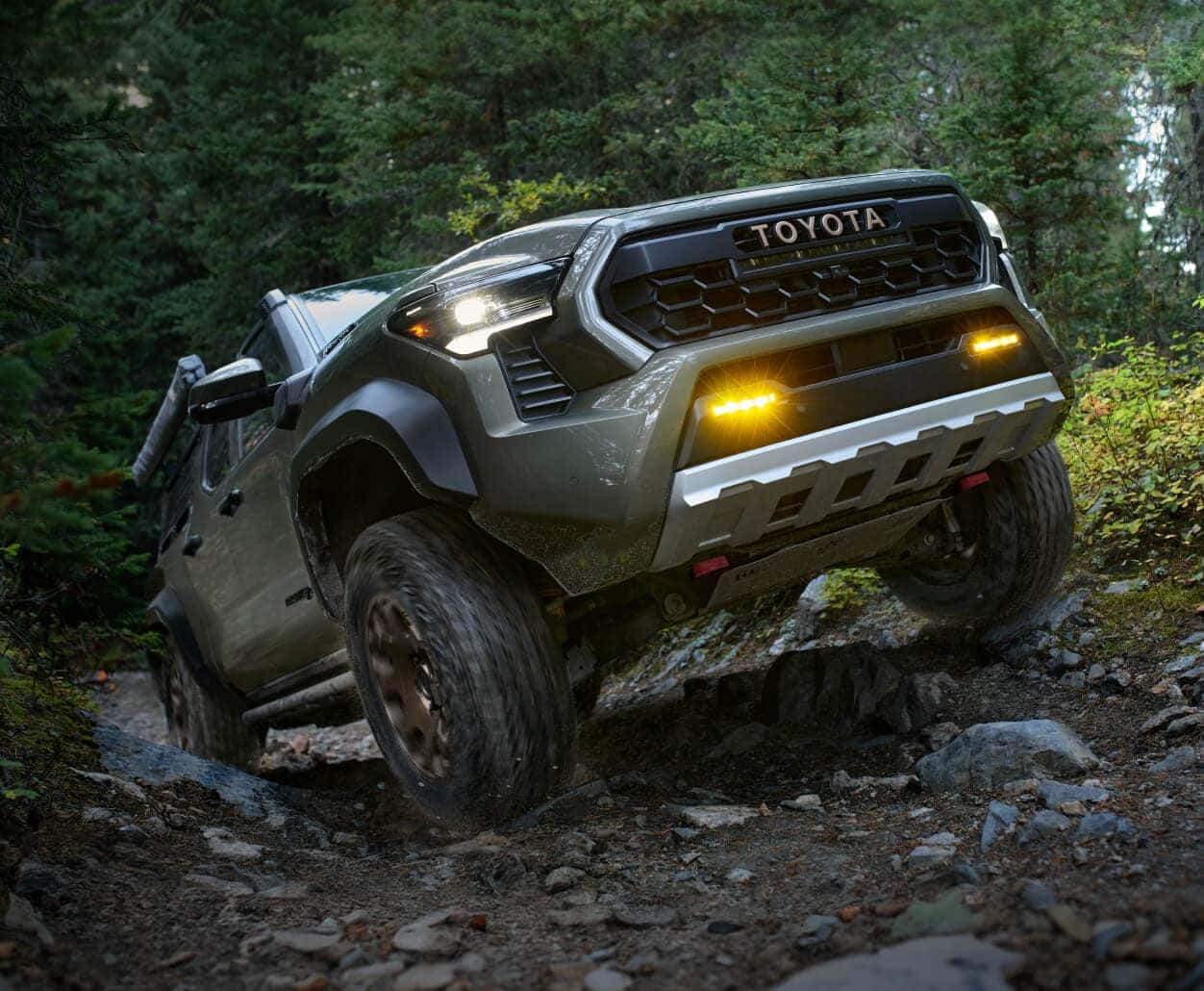
Truck generations work by taking milestone moments and separating them from the rest of the lineup. While the Tacoma truck may have facelifts that don't count as a new generation, major updates (such as new engines, a significant change in materials, chassis adjustments, features, and more) can mark a model's entry into a new era. These major redesign years give the Toyota Tacoma four distinct generations:
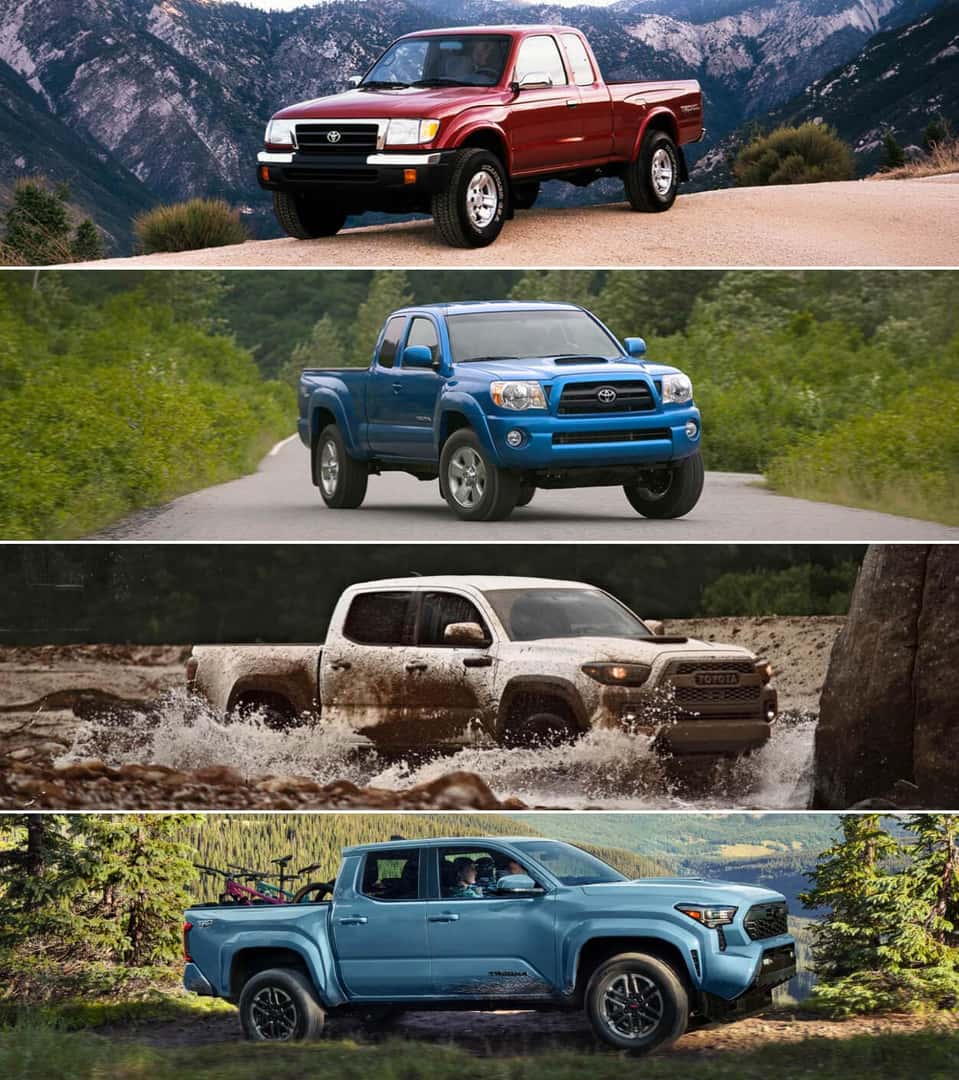
One aspect of this truck you might not expect to change is its exterior. However, the Toyota Tacoma body styles by year did change: the original Tacoma, for example, was a truly compact model, but every generation since has come closer and closer to the capacity and size of a midsize pickup. Let's see the highlights side-by-side:
| 1st | 2nd | 3rd | 4th | |
|---|---|---|---|---|
| Year Range | 1995 - 2004 | 2005 - 2015 | 2016 - 2023 | 2024 - Present |
| Major Engine Options |
|
|
|
|
| Plug-In Hybrid Variant | No | No | No | Yes |
| Cabins |
|
|
|
|
| Beds |
|
|
|
|
| Max Towing Capacity (Most Recent Model) | 5,000 lbs1 | 6,500 lbs1 | 6,800 lbs1 | 6,500 lbs1 |
| Max Payload Capacity (Most Recent Model) | 1,810 lbs2 | 1,500 lbs2 | 1,685 lbs2 | 1,709 lbs2 |
| Major Adjustments | Introducing the Tacoma |
|
|
|
There were three Tacoma redesign years, which signaled the next generation. During these generations, smaller facelifts were possible (such as adjustments to the Toyota Tacoma colors), though those amounted to minor styling refreshes more than actual era shifts.
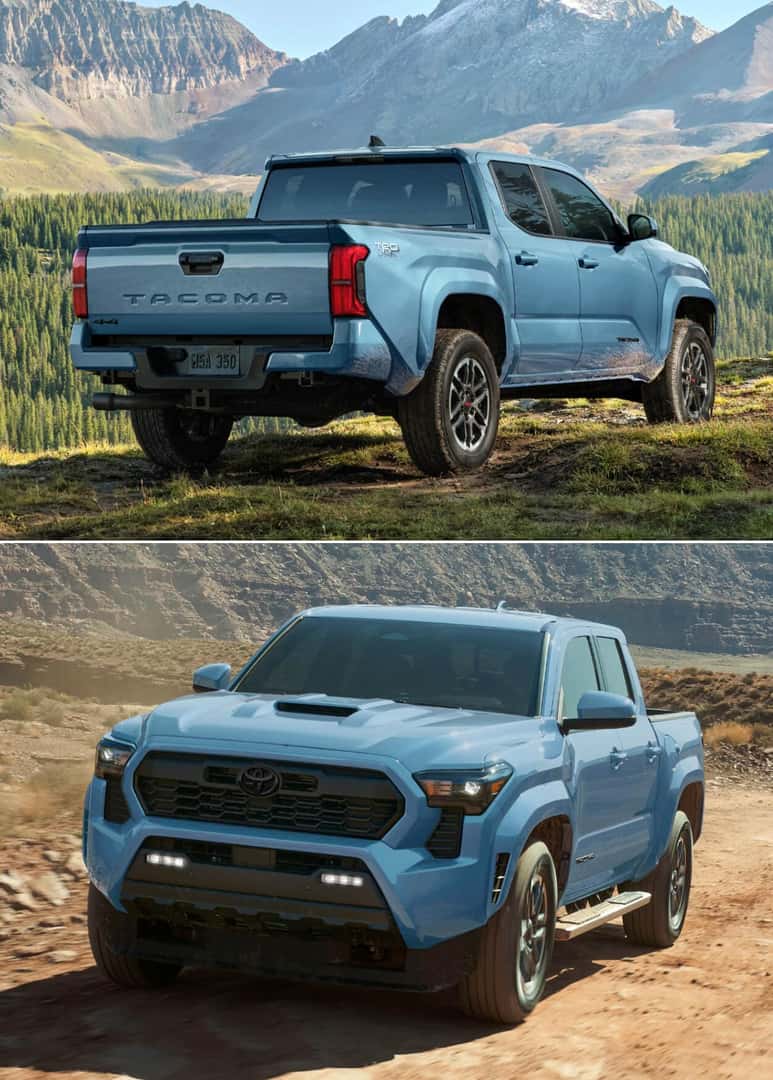
The earlier Toyota Tacoma generations are consistent members of our used inventory. Contact us today to see what models we have! Alternatively, check out our Toyota Tacoma vs. Ford Ranger guide and see which small truck comes out on top. No matter the Toyota Tacoma model you bring home, you'll have a hard-working, maneuverable, and efficient model.
There are four Toyota Tacoma model generations. These mark key milestones in technology, specifications, engines, and safety features, allowing each generation to feel, look, and act distinct from its siblings. A first-generation Tacoma, for example, has a 5,000-pound tow rating, while a third-generation Tacoma can tow 6,800 pounds.1 No matter the year, the Tacoma has always been a capable compact truck.
The years of the four Tacoma generations are as follows:
That means in 2005, 2016, and 2024, the Tacoma underwent a large enough redesign to be significantly different from the previous generation. The 2005 model, for instance, received a 4.0-liter V-6 engine as an available option and gained towing capacity.
Generally, the end of the second-generation Tacoma is widely lauded as a consistently excellent buy. That means a 2013-2015 pickup isn't a bad choice. Similarly, an end-of-the-line third-generation Tacoma from 2018, 2019, or 2020 is also a good choice, thanks to its solidified feature lineup and updated engine construction. However, you can't go wrong with any Tacoma generation: just ask our representatives.
1Before towing, confirm your vehicle and trailer are compatible, hooked up and loaded properly and that you have any necessary additional equipment. Do not exceed any Weight Ratings and follow all instructions in your Owner’s Manual. The maximum you can tow depends on base curb weight plus the total weight of any cargo, occupants, and added vehicle equipment. “Added vehicle equipment” includes additional standard/optional equipment and accessories added by the manufacturer, dealers, and/or vehicle owners. The only way to be certain of your vehicle’s exact curb weight is to weigh your vehicle without passengers or cargo. (Calculated with the new SAE J2807 method.) Installation of a tow hitch receiver or other accessories located near the rear bumper or side-door kick sensors may require disabling or removing the kick sensor, and the sensor operation setting in your vehicle should be turned off. See Owner’s Manual for limitations.
2Max payload varies based on accessories and vehicle configuration.